
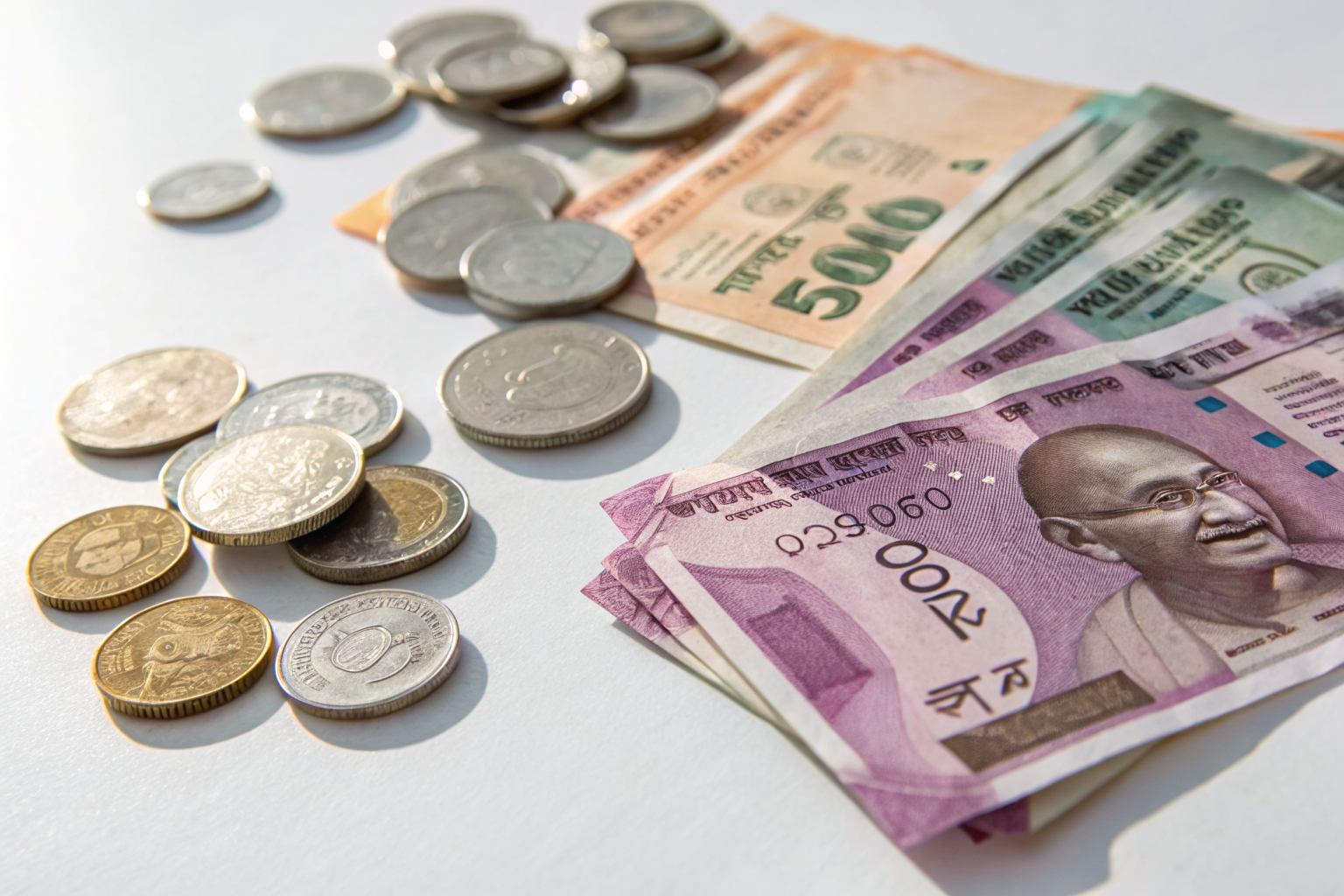
Currency Rounding Practices on Small Payouts
When the Reserve Bank of India implemented its paise rounding rule in 1991, few could have predicted how this seemingly minor regulation would ripple through every corner of India’s economy. The rule is straightforward: amounts with paise fractions below 50 are rounded down to the nearest rupee, while those at 50 paise or above are rounded up. What began as a practical solution for tax calculations and government refunds has become a daily reality affecting millions of transactions, from street vendor purchases to digital remittances.
The discontinuation of the 50 paise coin in practical circulation has made this rounding practice even more relevant, particularly for small payouts where every paisa counts. As India’s economy increasingly digitizes while maintaining a substantial cash-dependent population, understanding these rounding regulations and their real-world impacts becomes crucial for consumers, businesses, and policymakers navigating the complex landscape of Indian financial transactions.
Legal Framework for Rounding in India
The Reserve Bank of India’s 1991 directive on paise rounding established the foundational rules that govern how fractional currency amounts are handled across various transaction types. This regulation specifically addresses the practical challenges arising from the limited availability of small denomination coins, particularly the 50 paise coin, which while still legal tender, has largely disappeared from everyday circulation.
The framework distinguishes between cash and non-cash transactions, with rounding rules primarily applying to physical currency exchanges. For government transactions, including tax assessments, interest payments, and refunds, the rounding to the nearest rupee has become standard practice, simplifying administrative processes while ensuring consistency across different payment scenarios.
RBI Guidelines on Paise Fractions
The core RBI guideline states that any amount ending in paise fractions of less than 50 should be rounded down to the nearest rupee, while amounts with 50 paise or more are rounded up. For example, ₹12.49 becomes ₹12, while ₹12.50 becomes ₹13.
This rule applies specifically to cash transactions where exact change cannot be provided due to the unavailability of appropriate denomination coins. The guideline emphasizes that rounding should favor neither the payer nor the payee systematically, maintaining fairness through the mathematical precision of the 50 paise threshold.
Application to Government Payouts
Government departments consistently apply rounding rules to various payout scenarios, including income tax refunds, interest on government securities, and subsidy payments. The practice ensures that administrative costs associated with handling fractional amounts don’t exceed the actual benefit to recipients.
Tax calculations, particularly for small businesses and individual taxpayers, frequently result in amounts with paise fractions that are automatically rounded according to RBI guidelines before final settlement, streamlining the refund and payment process across different government agencies.
Retail and Cash Transaction Rounding
Retail establishments across India have adopted various approaches to handling paise rounding, with practices varying significantly between organized retail chains and smaller merchants. The absence of 50 paise coins in regular circulation has made rounding a practical necessity rather than just a regulatory compliance issue.
- Large retail chains typically program their point-of-sale systems to automatically round final bills to the nearest rupee
- Small merchants often manually round amounts, sometimes favoring upward rounding to avoid losses
- Street vendors and informal retailers frequently quote prices in whole rupees to avoid rounding complications
- Digital payment platforms may bypass rounding by transferring exact amounts electronically
- Fuel stations implement specific rounding protocols due to fractional pricing per liter
- Restaurant and hospitality businesses often absorb small fractions rather than implement systematic rounding
Consumer Complaints and Overcharging
Consumer forums regularly receive complaints about retailers who consistently round up rather than following the mathematically neutral RBI guidelines. Small businesses, facing tight margins, sometimes view rounding as an opportunity to recover minor amounts, leading to systematic overcharging that disproportionately affects frequent small-transaction customers.
The cumulative effect of biased rounding can be significant for consumers making multiple daily transactions. A customer purchasing items worth ₹99.25 and ₹149.30 in separate transactions might pay ₹99 and ₹149 under fair rounding, but could be charged ₹100 and ₹150 by merchants who consistently round up.
Software modifications in smaller retail establishments sometimes default to upward rounding, requiring consumer awareness and vigilance to ensure fair application of rounding rules across different transaction scenarios.
Rounding in Remittances and Bank Transfers
Bank transfers and remittances within India typically round amounts to the nearest rupee when involving cash payouts, though digital transfers can maintain exact fractional amounts. This creates a dual system where the final rounding depends on the recipient’s chosen collection method.
| Country/Currency | Transaction Type | Rounding Unit | Example |
|---|---|---|---|
| India (INR) | Bank Transfer | Nearest Rupee | ₹1,234.67 → ₹1,235 |
| Bangladesh (BDT) | Remittance | Nearest Taka | ৳567.45 → ৳567 |
| Pakistan (PKR) | Money Transfer | Nearest Rupee | ₨890.30 → ₨890 |
| Nepal (NPR) | Domestic Transfer | Nearest Rupee | रू2,100.80 → रू2,101 |
| Sri Lanka (LKR) | Bank Payout | Nearest Rupee | රු3,456.25 → රු3,456 |
India-Specific Remittance Rules
Domestic remittances within India follow the standard RBI rounding guidelines when recipients collect cash from agent locations or bank branches. Money transfer operators like Western Union, MoneyGram, and domestic services round final payout amounts to eliminate fractional currency requirements.
International remittances to India may involve double rounding – first during currency conversion and again during cash payout, potentially creating small discrepancies that favor either the sender or recipient depending on the specific exchange rates and rounding methods applied.
Global Comparisons for Small Payouts
South Asian neighboring countries generally follow similar rounding practices for cash transactions, with Bangladesh, Pakistan, and Nepal all rounding to their respective whole currency units. This regional consistency reflects shared colonial banking heritage and practical challenges with small denomination coin circulation.
Sri Lanka’s banking system applies rounding rules comparable to India’s, though with different thresholds based on local currency subdivisions, demonstrating how regional monetary policies have evolved along similar lines to address common practical challenges in cash-based economies.
Impact of Small Denomination Coin Shortages
The chronic shortage of 50 paise and smaller denomination coins across India has transformed rounding from a regulatory guideline into an economic necessity. The Reserve Bank of India’s reduced production of these coins, citing cost-effectiveness concerns, has created a practical environment where exact change is often impossible to provide.
This shortage disproportionately affects low-income consumers who make frequent small-value transactions and are more likely to encounter rounding situations. Street vendors, small retailers, and service providers in lower-income areas often struggle with providing exact change, leading to informal bartering or systematic rounding that may not always follow official guidelines.
The economic impact extends beyond individual transactions to affect pricing strategies, with many small businesses now structuring their prices to minimize rounding complications, effectively removing certain price points from the market and potentially reducing price competition in specific segments.
Government Responses
- Deployment of hybrid ATMs capable of dispensing smaller denomination notes to address change shortages
- Increased production quotas for ₹10 and ₹20 notes to facilitate easier change-making in retail transactions
- Digital payment infrastructure investments to reduce dependency on physical currency for small transactions
- Banking sector guidelines encouraging electronic fund transfers for routine small payments
- Public awareness campaigns educating consumers about fair rounding practices and their rights
Rounding Rules Across Transaction Types
Different transaction categories in India apply varying rounding approaches based on regulatory requirements, practical constraints, and industry standards. The distinction between cash and digital transactions has become increasingly important as electronic payment methods allow for exact fractional amounts while cash transactions require rounding.
| Transaction Type | Rounding Rule | Applies To | Source |
|---|---|---|---|
| Tax Refunds | Nearest Rupee | All Cash Payouts | RBI Guidelines |
| Retail Purchases | Varies by Merchant | Cash Transactions | Industry Practice |
| Bank Interest | Nearest Rupee | Savings Accounts | Banking Regulation |
| Remittances | Nearest Rupee | Cash Collection | RBI Guidelines |
| Digital Payments | Exact Amount | Electronic Transfers | Technology Standard |
| Government Subsidies | Nearest Rupee | Direct Benefit Transfer | Policy Directive |
| Fuel Purchases | Standardized Rounding | Retail Fuel Stations | Petroleum Ministry |
Cash vs Digital Payouts
The fundamental distinction between cash and digital transactions creates a two-tiered system where identical amounts may result in different final payouts depending on the collection method. Digital transactions through UPI, NEFT, or mobile wallets can transfer exact amounts including paise fractions, while cash collections require rounding.
This disparity has led to consumer preferences for digital collection methods when fractional amounts favor the recipient, and cash collection when rounding would benefit them, creating behavioral economics effects that influence payment method choices beyond convenience factors.
Examples of Small Payout Calculations
| Amount (INR) | Paise | Rounded To |
|---|---|---|
| ₹127.23 | 23 | ₹127 |
| ₹89.50 | 50 | ₹90 |
| ₹456.78 | 78 | ₹457 |
| ₹34.49 | 49 | ₹34 |
Challenges for Businesses and Consumers
The implementation of rounding practices across India’s diverse economic landscape presents numerous challenges that affect both business operations and consumer experiences. These challenges span from technical implementation issues to broader economic equity concerns.
- Systematic bias in rounding implementations can lead to unintended wealth transfers from consumers to businesses over multiple transactions
- Small businesses face technological barriers in implementing fair rounding algorithms, often defaulting to simpler upward rounding methods
- Low-income consumers are disproportionately affected by rounding practices due to their higher frequency of small-value cash transactions
- Lack of standardization across different business sectors creates consumer confusion and potential exploitation opportunities
- Administrative costs for businesses to implement and maintain proper rounding systems can outweigh benefits in very small transaction scenarios
- Consumer awareness gaps about proper rounding rules limit their ability to identify and challenge incorrect implementations
Economic Implications
The aggregate economic effect of rounding practices across India’s massive transaction volume creates significant wealth redistribution patterns that are often invisible to individual participants. Studies suggest that systematic upward rounding in retail could transfer billions of rupees annually from consumers to businesses, while fair mathematical rounding should theoretically balance these transfers.
The burden falls disproportionately on rural and low-income urban populations who rely heavily on cash transactions and may lack the financial literacy or bargaining power to ensure fair rounding practices, potentially exacerbating existing economic inequalities through seemingly minor transaction-level effects.
Future of Rounding Amid Digital Shift
India’s rapid digital payment adoption is fundamentally reshaping the relevance and application of currency rounding rules, with urban areas seeing dramatic shifts toward exact electronic transactions while rural areas maintain substantial cash dependency. The coexistence of these payment ecosystems creates complex scenarios where the same transaction might be handled differently based on geographic location and consumer preferences.
Government initiatives like Digital India and the push for financial inclusion through digital payment platforms suggest a future where rounding becomes less relevant for everyday transactions. However, the persistence of cash-based informal economies, particularly in rural areas and among lower-income populations, means that rounding practices will remain economically significant for the foreseeable future.
Policy discussions increasingly focus on harmonizing rounding practices across digital and cash channels, with potential regulatory changes that could mandate consistent treatment regardless of payment method, ensuring that the transition to digital payments doesn’t create unfair advantages or disadvantages for different consumer segments.
Coin Replacement Policies
The Reserve Bank of India continues to grapple with the economic inefficiency of producing coins worth less than their manufacturing cost, leading to policies that effectively phase out smaller denominations through reduced production rather than formal demonetization. This approach allows existing coins to remain legal tender while practical unavailability forces rounding adoption.
Hybrid solutions, including the promotion of digital wallets that can hold exact fractional amounts and be converted to cash at convenient rounding thresholds, represent compromise approaches that maintain mathematical precision while acknowledging physical currency limitations in everyday commerce.
RBI and Govt Initiatives
Recent Reserve Bank initiatives focus on modernizing currency handling infrastructure, including upgraded ATM systems capable of dispensing more diverse denomination combinations and specialized coin-dispensing machines for high-volume retail locations. These technological solutions aim to reduce forced rounding situations by improving change-making capabilities.
Government digital payment incentives, including merchant fee subsidies and consumer cashback programs, represent indirect approaches to reducing rounding relevance by encouraging electronic transactions that can handle exact amounts without physical currency constraints, effectively solving rounding problems through behavioral change rather than regulatory modification.
Comparison with Global Cash Rounding
International experiences with cash rounding provide valuable insights for India’s evolving approach, with developed economies showing various strategies for managing fractional currency challenges. The global trend toward reduced cash usage has influenced rounding policy development worldwide.
| Country | Smallest Unit | Rounding Method | Cash Only? |
|---|---|---|---|
| Sweden | 1 Krona | Nearest Krona | Yes |
| UAE | 5 Fils | Nearest 5 Fils | Yes |
| China | 1 Jiao | Nearest 0.1 Yuan | Varies |
| Canada | 5 Cents | Nearest Nickel | Yes |
| Australia | 5 Cents | Nearest 5 Cents | Yes |
| New Zealand | 10 Cents | Nearest 10 Cents | Yes |
| Finland | 5 Euro Cents | Nearest 5 Cents | Yes |
| Brazil | 5 Centavos | Nearest 5 Centavos | Yes |
Lessons for India
- Gradual phase-out of small denominations through reduced production rather than sudden demonetization minimizes economic disruption while achieving policy objectives
- Clear regulatory frameworks that distinguish between cash and electronic transactions help businesses implement consistent rounding practices without regulatory ambiguity
- Investment in digital payment infrastructure can reduce rounding relevance more effectively than complex coin circulation management systems
- Consumer education programs about fair rounding practices help prevent systematic exploitation while maintaining public trust in monetary systems
- Flexible policies that allow regional variations in rounding practices can accommodate different levels of digital adoption and economic development across diverse markets